


A lawyer directory can help a prospective client find your firm, verify a referral or see independent recognition of your work. Those are different jobs. A broad consumer listing, a paid placement and a researched ranking should not be judged by the same measure. The best choice depends on who you want to reach and what would help that audience trust your firm.
Begin with accurate free profiles, then examine the directories your intended clients use and where your closest competitors appear. A business litigation practice may prioritize researched recognition, while a local family law firm may get more value from consumer profiles and reviews. A nominations and rankings strategy should follow those business development priorities.
Comparing Legal Directories
Each option offers a free public listing or editorial submission, although selection is not guaranteed and bar dues apply. Paid rates are starting prices where published.
|
Directory |
Best for |
Estimated traffic |
Paid options |
|---|---|---|---|
|
Chambers and Partners |
Business-facing practices |
335K |
Contact for quote |
|
The Legal 500 |
Firms with substantial practice work |
111K |
Contact for quote |
|
Benchmark Litigation |
Litigation teams |
34K |
Contact for quote |
|
Lawdragon |
Established individual lawyers |
42K |
Starting at $695/year |
|
Super Lawyers |
State-level attorney recognition |
4.6M |
Contact for quote |
|
Best Lawyers |
Peer-recognized attorneys |
1.1M |
Contact for quote |
|
Martindale-Hubbell |
Firms valuing peer and client reviews |
224K |
Starting at $399/month |
|
Justia |
Broad, local visibility |
90K |
Starting at $19.99/month |
|
FindLaw |
Consumer-facing practices |
7.4M |
Starting at $158/month |
|
Avvo |
Solo and small-firm visibility |
1.7M |
Contact for quote |
|
Lawyers.com |
Consumer inquiries and reviews |
410K |
Starting at $399/month |
|
State bar directories |
License verification |
N/A |
Bar dues vary |
Why Lawyer Directories Still Matter
People encounter directories while researching a legal issue or checking a referral. A complete profile can help them assess a lawyer’s experience and find a way to contact the firm. Earned recognition can support a proposal or referral conversation even when the listing itself sends few visits.
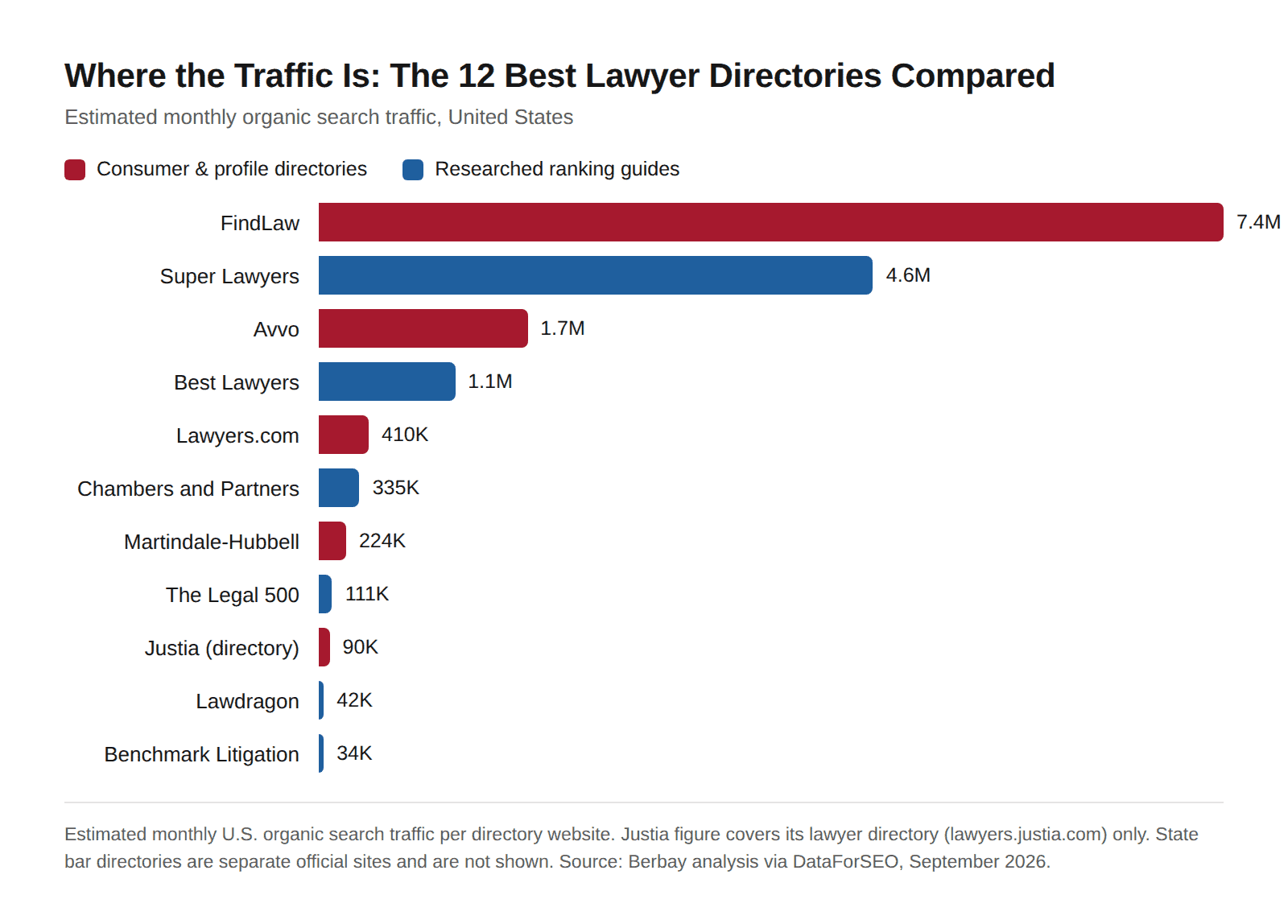
Directory pages can appear in Google results for practice and location searches and may be cited in AI answers. An indexed profile can also provide a backlink to the firm’s website. These are reasons to include directory profiles in a law firm SEO plan, but no listing guarantees a Google ranking gain or an AI mention. Check whether the specific page is visible and useful to the people you want to reach.
Berbay’s Picks for Legal Directories
The researched guides appear first, followed by broader profile and review sites, then official bar records. This grouping reflects how firms use them; it does not rank their quality or predict results.
Chambers and Partners
This researched guide carries weight with many business-facing practices. Researchers review significant matters, speak with referees and gather market feedback, so recognition can support a pitch to in-house counsel.

Check the practice and jurisdiction criteria, then prepare matters that show the team’s contribution and referees who can respond. Our Chambers submission guide explains how to make that case. The process takes time, and a local consumer practice seeking immediate inquiries may have better first priorities.
The Legal 500
This practice-area guide evaluates submissions alongside client and market feedback. It can help a firm demonstrate the depth of its work to clients comparing outside counsel. Review the relevant category and research deadline, then submit representative matters and referees. If the guide does not cover the work your firm wants to be known for, the preparation may have limited business development value.
Benchmark Litigation
Its focus on disputes makes this a useful recognition opportunity for trial and arbitration teams. Researchers consider casework, practitioner views and references. Review the current research process and explain what made the team’s role in each dispute significant. A list of case names alone does little to distinguish the practice. The narrow litigation focus is its strength and also limits its value to firms with other kinds of work.
Lawdragon
The specialty guides can draw attention to an individual lawyer’s work in a defined field. Review the nomination calendar, select the guide that fits the lawyer’s practice and submit recent, significant work. Selection is editorial, while an expanded profile is optional. A brief earned mention may not offer the same detail as a paid profile, and a generic nomination sent to every list is unlikely to make the strongest case.
Super Lawyers
The state and practice focus can provide a recognizable credential for biographies and referral conversations. Eligible attorneys may nominate peers during the applicable window, and lawyers should keep their professional information current for researchers.

Selection is editorial; enhanced promotion is separate. Before paying for more visibility, ask whether the people who refer or hire your lawyers recognize the distinction in your market.
Best Lawyers
Confidential peer review by practice and geography makes recognition useful in proposals or when a prospect compares counsel. Nominate lawyers with accurate firm, market and practice details, then let the publisher’s review process run. The recognition itself does not guarantee inquiries. Compare the free presence with any paid marketing product before deciding whether an upgrade adds value.
Martindale-Hubbell
Peer assessments are the distinguishing feature here, while client reviews offer a separate account of the service experience. Update each attorney’s profile and admission details, then invite appropriate peers and clients to provide feedback under applicable rules. Qualifying reviews depend on actual responses. Any paid package should be assessed across the publisher’s network, not treated as the cost of the basic profile.
Justia
This is a practical place to complete a neglected attorney profile. Clients can search by location and practice, then review credentials and contact details. Claim or create the lawyer’s entry and fill in the information a prospect needs to make an informed choice. Prominent placement is competitive, so measure the free profile before considering membership or advertising upgrades.
FindLaw
The directory sits alongside consumer legal information, allowing readers researching a problem to look for counsel. That makes it relevant to many consumer-facing practices and less directly suited to a niche corporate team. Find and correct the attorney’s existing entry before considering paid visibility. Ask which practice searches, locations, contract terms and reporting a premium placement actually covers.
Avvo
Client reviews and a rating based on professional information give prospects two different signals. The site may rate a lawyer even when the profile is unclaimed, so search for the record and correct inaccuracies. Paid advertising does not raise the rating. Consider whether clients in your practice use the platform before allocating budget to a promoted profile.
Lawyers.com
Consumers can browse by legal issue and location, and the profiles also display reviews. Find the attorney’s existing entry and correct the biography, contact details and practice areas. The paid offer overlaps with the broader Martindale-Avvo network. Ask what exposure is unique to this site before purchasing a package that covers multiple properties.
State Bar Directories
These official records let a prospect verify admission and public licensing details. Depending on the jurisdiction, a record may include status, contact information, discipline or a certified specialty. Registration normally creates it; check each lawyer’s entry and correct inaccuracies through the bar’s member process. The official source is credible, but its limited space cannot replace a substantive attorney biography.
Practice-Specific Lawyer Directories
A smaller directory may concentrate the right audience. The American Association for Justice member directory is relevant to many plaintiff trial lawyers; AILA’s lawyer search serves immigration; the National Association of Criminal Defense Lawyers directory serves criminal defense; and the American Academy of Matrimonial Lawyers finder lists its family law Fellows. These are different kinds of membership or fellowship listings, not paid placements that anyone can claim. Check each organization’s eligibility rules before treating inclusion as an option.
For any practice, search as a client or referring lawyer would and inspect the firms listed. A smaller site may outperform a general directory when its visitors fit. Verify its audience, criteria and fees, and distinguish membership from a screened referral or earned recognition.
How to Choose a Lawyer Directory
Use the table to build a shortlist, then inspect the live pages, the firms listed beside you and the terms of any paid offer. These questions help separate a credible opportunity from a familiar name:
- Audience and visibility: Does it appear for relevant practice and location searches, and are the results useful to your prospective clients? Check live search results and your own Search Console data.
- Credibility: Is inclusion independently researched, verified, self-published or bought? Can readers tell the difference?
- Profile control: Can the firm correct facts, describe its work, link to a relevant page, publish useful material and manage reviews or contact forms?
- Effort and cost: What attorney time, referee coordination, approval work, annual fee or advertising spend is required? A free submission still consumes resources.
- Evidence of return: Can you track referral visits in Google Analytics, inquiries in your intake system and recognition used in pitches?
What Getting Listed Actually Costs
The table shows starting prices, but the real cost also includes attorney time, referee coordination, market coverage and contract length. A network package may cover several sites, so one quote should not be counted as a separate fee for each.
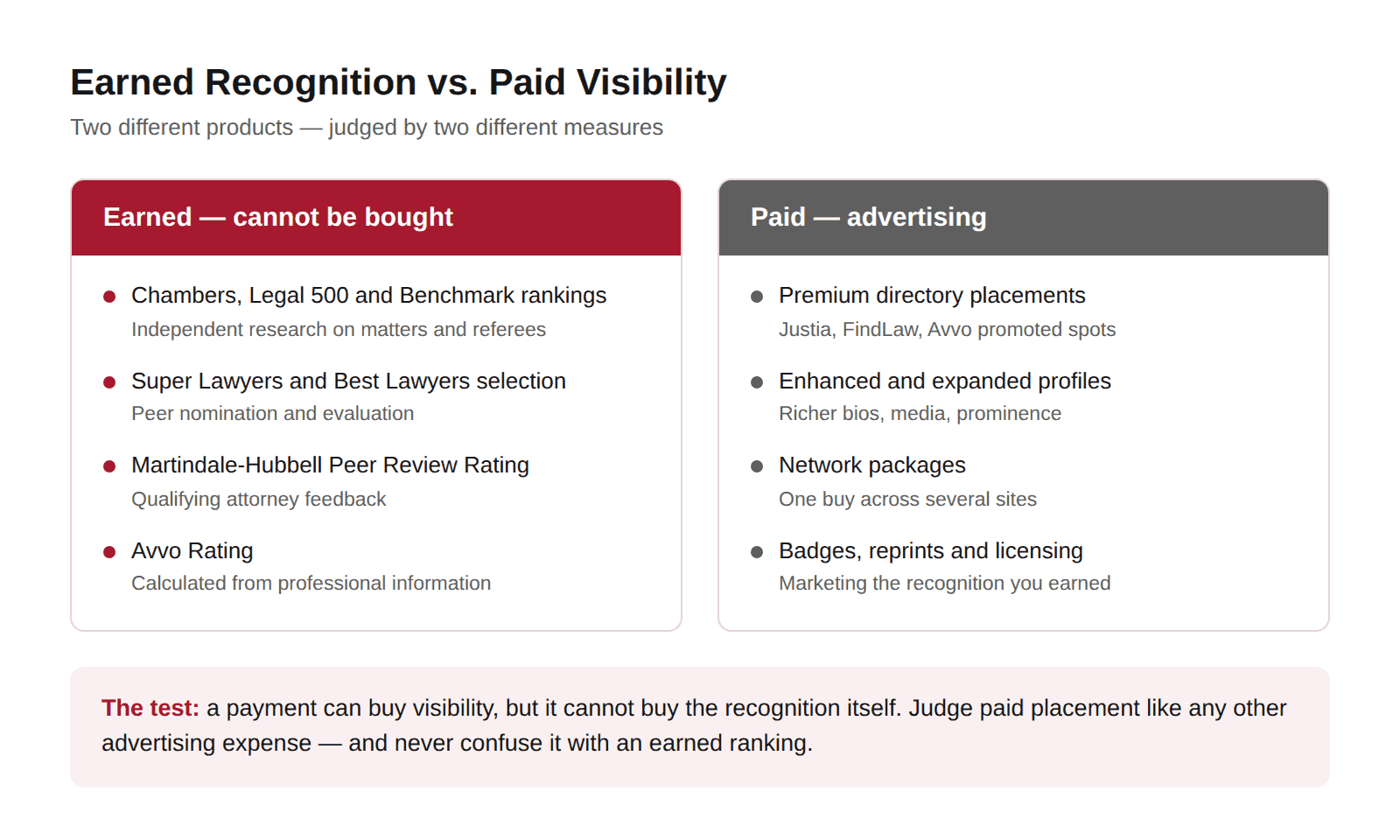
Evaluate the entire package before upgrading. Confirm that the page where your firm will appear is indexed by Google, whether it has a crawlable followed backlink to a relevant firm page, and how any paid link is labeled. Ask about placement on well-visited practice, city or editorial pages as well as the profile itself. Get the market, contract, reporting and cancellation terms in writing, then compare qualified inquiries with the full cost. Our guide to paying for law firm awards offers another way to assess an offer. A paid link should follow Google’s guidance; a followed backlink should never be promised as an advertising benefit.
Getting More Out of a Listing You Already Have
A useful listing does more than occupy a search result. Link to a complete attorney biography and a relevant practice page. If the directory permits reviews, invite eligible clients to share honest feedback in a manner consistent with confidentiality obligations and the firm’s applicable professional rules. Monitor inquiries and respond through the firm’s normal intake process. See how attorney reviews affect search visibility as part of that wider effort.
When the firm earns a ranking, explain what was recognized and by whom. Add the distinction to relevant bios, pitches, proposals, email signatures and recruiting materials, subject to the publisher’s badge license and applicable advertising rules. An announcement can also support a targeted law firm PR program. Review the listing as part of the firm’s wider online reputation, so the message remains consistent wherever someone checks the firm.
How to Measure a Directory’s Return
Separate three possible outcomes: inquiries, search visibility and credibility in business development. In Google Analytics, review referral traffic from each directory and the pages visitors reach. In the intake system, ask how prospects found the firm, record qualified consultations and track matters opened. For a paid placement, compare those outcomes with the full fee and staff time, while allowing for the firm’s typical decision cycle.
An earned ranking may play a different role. Note when it is used in pitches, requests for proposal or referral conversations, and whether the intended audience recognizes it. Do not claim that a ranking alone won a matter. Review the evidence after a reasonable period, decide whether to renew or improve the listing, and stop spending on placements that cannot show a plausible contribution.
What Three Decades of Submissions Has Taught Us
Across Chambers submissions, three weaknesses recur: descriptions that never explain why the work mattered, accounts that obscure the wider team’s role, and referee lists filled with contacts unlikely to respond. We gather details early, review confidentiality and client permission, and make the firm’s contribution clear to researchers. Even a strong submission cannot promise a ranking. It does give researchers a better basis for evaluating the work and helps the firm improve the next cycle. Our Chambers rankings guidance explains the research process.
Partner With a Law Firm Marketing and PR Team
The right directory plan starts with the firm’s clients and growth priorities, then assigns time and budget to the listings that can support them. Berbay helps law firms evaluate opportunities, organize evidence and manage nominations and rankings submissions as part of a broader visibility strategy. We work with your lawyers to make the strongest accurate case for their work and assess what each result contributes after publication.
If your firm is deciding which directories deserve its attention, contact Berbay to discuss a focused plan.