

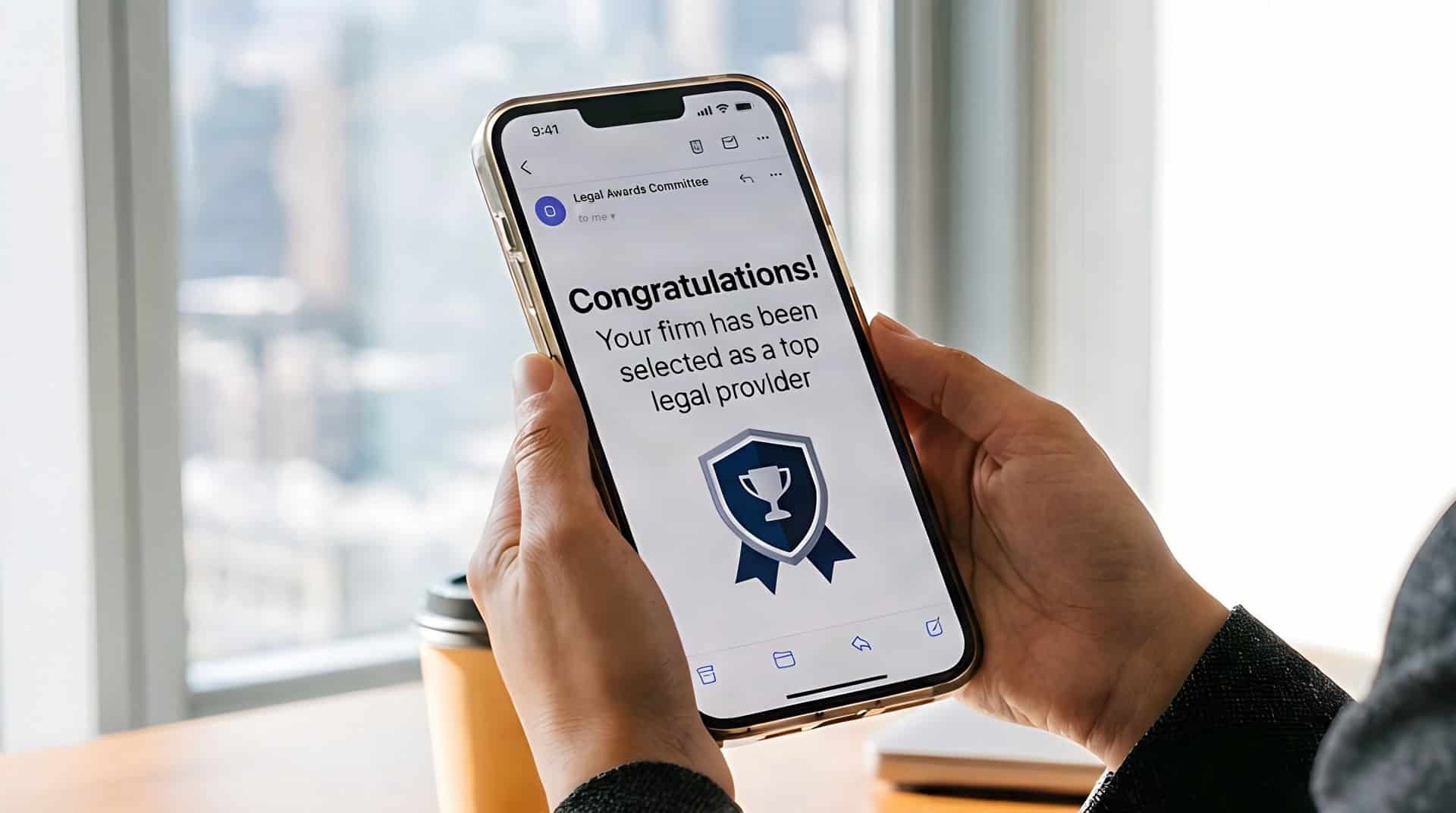
Are lawyer awards legit, or a scam? Some are both. Legitimate rankings, such as those based on peer review or independent directories, can build credibility and help your firm stand out. But for every respected list, there are dozens of vanity awards that exist only to sell you a membership, a plaque or an ad. The trick is knowing which is which.
Do you get regular emails with the latest and greatest legal ranking that you’ve never heard of and find yourself wondering if it’s legitimate? We are here to tell you that many of them are not legitimate, and in fact, are just scammers taking advantage of the nomination “industry.” But how do you know which are worth your time and which you should delete?
How to Tell if a Lawyer Award Is a Scam
Pay-to-Play
A good rule of thumb is that if the award is pay-to-play, it’s not legitimate. While there are a handful of awards that require a small application fee, anything beyond this should be your first red flag. Recognition should be based solely on merit.
Membership Fees
Another form of payment could be in the requirement of a membership. For example, if you are being asked to pay a $300 membership fee which will get you on a list, that is another red flag.
The Upsell
This is similar to the pay-to-play scenarios above but masked slightly differently. For example, you’ve been notified that you were selected as a winner but need to place an ad to claim your spot, third red flag.
Congratulatory Message
If you receive a message congratulating you for an award that you never submitted for, it’s very likely this is not a legitimate award. For the majority of awards, you or someone else needs to submit you for consideration. While there are some exceptions, by and large, you can disregard these emails.
How to Check if a Lawyer Award Is Legit
If none of the above happens, there are a few other ways to spot a spammy or scammy list. For example:
Questionable Website
Check out their website. If their website seems incomplete, only a few pages, has broken links, or is missing information, this is a sure sign that it’s not legitimate.
Limited Information
If you are having trouble finding information on the award, or are unable to decipher much about the list, it’s likely not legitimate.
Previous Winners
Look at the list of past winners for any recognizable law firms. If they do not provide this, or you don’t recognize anyone, then it is most likely a spammy situation.
Transparency
The website should have an explanation of the review and selection process. The more detailed it is, the better. The less detailed, the more suspicious you should be.
If you have any suspicion that an award is not legitimate, it is best to avoid it.
What About Best Lawyers, Super Lawyers and Chambers?
These are the names we get asked about most. Here is how each one says it selects lawyers, so you can judge for yourself.
Best Lawyers
Anyone can nominate a lawyer, including the lawyer themselves. Nominees are then reviewed by lawyers already recognized in the same practice area, and bar standing is checked before results are published. Best Lawyers describes its recognition as based entirely on peer review. It does sell marketing products to lawyers who are recognized, but those are optional.
Super Lawyers
Super Lawyers combines nominations, independent research on 12 indicators and peer evaluation, and selects roughly 5% of lawyers in each state. Its selection process page states that a lawyer cannot buy their way onto the list. Advertising is sold separately.
Chambers and Partners
Chambers ranks firms and lawyers through research interviews with clients and peers, supported by firm submissions. There is no fee to submit, and buying a profile has no bearing on rankings. We explain the process in our guide to how Chambers rankings work.
Lawyers of Distinction
Lawyers of Distinction says it scores candidates on 12 factors and that attorneys cannot pay to be nominated. Membership, however, costs $475 to $775 a year, according to its membership page.
Check the FirmWise List of Scammy Awards
One great place to check for spammy or scammy awards is a list FirmWise created. This law firm website design company saw the need to create a comprehensive list. It provides answers to how reputable the ranking is and what they may ask for in the submission or email request. Click here to view the list.
If you’ve determined the email you’ve received is from a spammy award, delete it and have the sender blocked. By taking these steps to stop the emails early on, you will help avoid an inbox full of unnecessary messages from this “award” and other scammers.
Beware of the Plaque!
Another opportunity for unnecessary spending when it comes to legal awards is the purchase of plaques. If you win a legitimate award and want a plaque for your wall or lobby, then you should order it, but any company selling you a plaque for a list you’ve never heard of is one you can safely ignore.
The Risk of Promoting a Pay-to-Play Award
A vanity award costs more than its fee once it goes on your website. State bar rules prohibit lawyer advertising that is false or misleading, and California’s Rule 7.1 applies that standard to any communication about a lawyer’s services, award claims included. The Federal Trade Commission also warns consumers that some lawyer badges are vanity awards that can be bought.
Several states go further and spell out what an award claim must look like:
- California. Since January 1, 2026, Business and Professions Code section 6157.2 allows an ad to reference an award only if it is not conferred by membership and the organization does not charge or solicit a fee for the recognition. That makes dues-based memberships hard to promote in California. See our overview of California attorney advertising rules for the rest of the changes.
- New Jersey. Under RPC 7.1(a)(3), an ad citing an award must name the organization, rest on a basis that can be substantiated and include the disclaimer “No aspect of this advertisement has been approved by the Supreme Court of New Jersey.” The rule’s comment adds that the honor must not be issued for a price.
- Florida. The Florida Bar’s advertising committee has found Chambers USA to be a bona fide organization that uses objective selection criteria, which is the standard Florida applies to advertised awards.
Wording matters too. Super Lawyers itself says a lawyer on its list is not “a Super Lawyer”; the accurate claim is that the lawyer was named to that year’s list. Review every badge on your website against your state’s current rules, and check with ethics counsel when a case is unclear.
Lawyer Award FAQs
Get Help Vetting Lawyer Award Nominations
Even if you do your research, it can be hard to tell a legitimate legal award from a scam. At Berbay Marketing & PR, we vet nomination opportunities for law firms every year, help you decide which rankings are worth pursuing and prepare submissions that give your attorneys the best chance of being recognized.
Need assistance with nominations for your law firm?