The notification email arrives in your inbox with congratulations: you have been selected for attorney recognition. For managing partners, lawyers and marketing directors, the questions follow quickly. Is this a legit ranking, does the accolade mean anything to clients, and are you allowed to say so on your website without violating advertising rules?
Earning a spot in the Super Lawyers directory or the Best Lawyers directory is entirely free and merit-based. Neither accolade can be bought. However, once the selection is finalized, both publishers actively sell upgraded digital profiles, trademarked badges and print magazine inserts.
When comparing Super Lawyers and Best Lawyers, understanding the difference between earning the credential and buying the advertising collateral is critical. Which one matters most depends heavily on whether your firm targets consumers or corporate clients. Here is a clear look at how both platforms operate and whether upgrading your profile can create visibility and attract new clients.
Super Lawyers vs. Best Lawyers at a Glance
While both rankings are established third-party recognitions, they rely on different methodologies to build their lists. The following comparison highlights how each program operates. Note that this table compares the administrative structures of these recognition programs, not lawyer quality or individual case outcomes.
|
Factor |
Super Lawyers |
Best Lawyers |
|---|---|---|
|
Publisher |
Thomson Reuters |
Best Lawyers |
|
Selection model |
Nominations, independent research, peer evaluation, final selection by Super Lawyers |
Peer review based on confidential surveys of already-recognized lawyers |
|
Who can nominate |
Peers only; no self-nominations |
Anyone, including the nominee |
|
Research component |
Yes, utilizing 12 published indicators |
Peer feedback is the core; eligibility is verified with the state bar |
|
Selectivity |
No more than 5% of lawyers in a state |
No more than 5% of U.S. lawyers |
|
Early-career list |
Rising Stars (2.5% of lawyers; age 40 or under, or 10 years or less in practice) |
Ones to Watch (typically 3 to 9 years in practice, depending on jurisdiction) |
|
Fee to be selected |
None |
None |
|
Optional paid products |
Enhanced profiles, display ads, badges, print magazine placements |
Enhanced profiles, display ads, badges, print magazine placements |
|
Best marketing fit |
Credibility in attorney bios and other marketing materials |
Credibility in attorney bios and other marketing materials |
How the Super Lawyers Selection Process Works
The Super Lawyers selection process follows a patented, four-step methodology. Understanding these mechanics is essential because the independent research stage is what separates this list from a simple popularity vote.
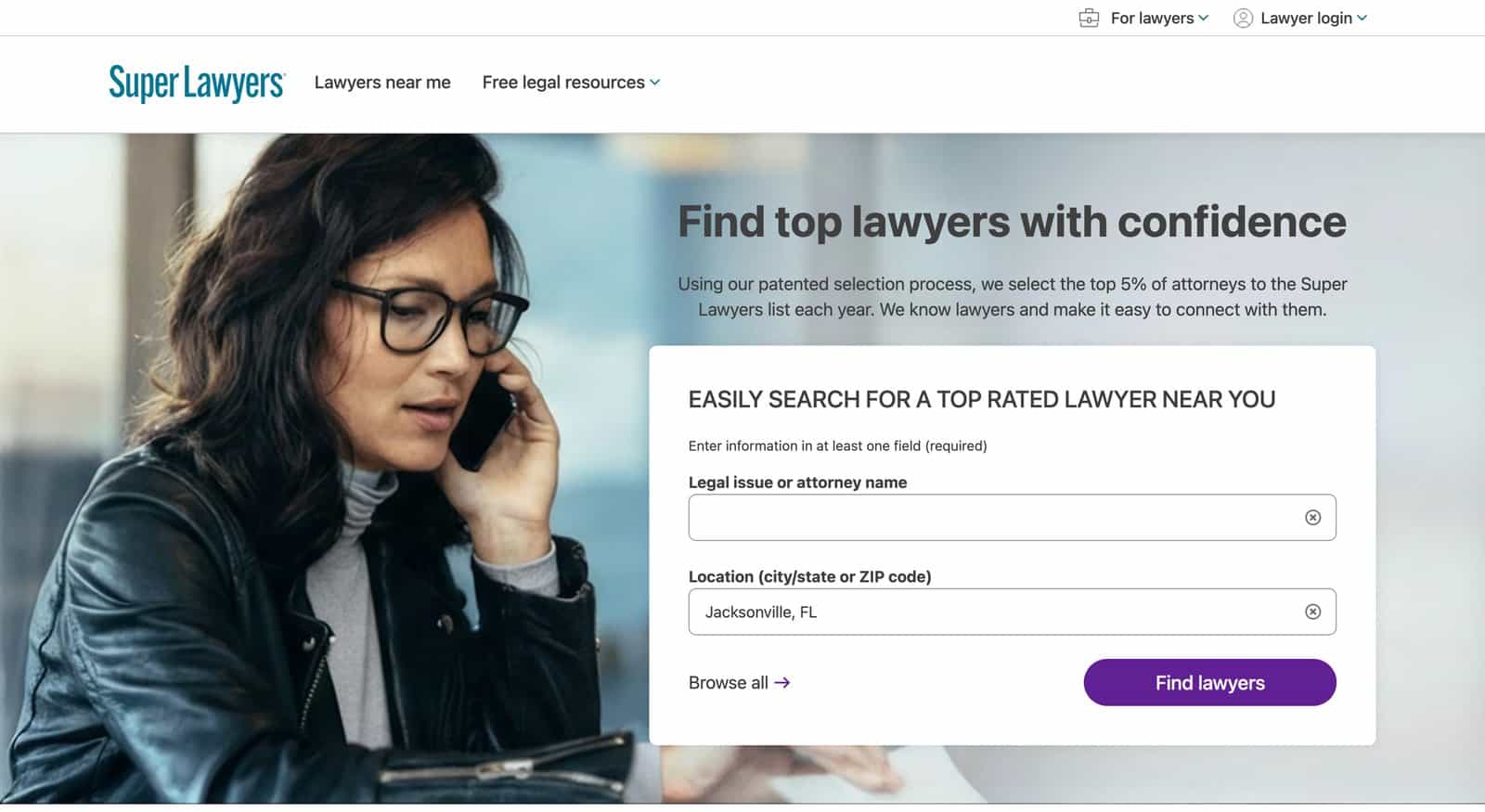
First, attorneys enter the candidate pool through peer nominations. Lawyers cannot nominate themselves, and out-of-firm nominations carry a higher point value than in-firm nominations to prevent firms from only voting for their own firm colleagues.
Second, the Super Lawyers research team evaluates candidates across 12 weighted indicators of professional achievement. These indicators include verdicts and settlements, transactions, representative clients, experience, honors, special licenses and pro bono work.
Third, candidates with the highest scores from the first two steps serve on a Blue Ribbon Panel to evaluate other candidates within their primary practice area. Then the top-scoring attorneys are selected. The final selection cap ensures no more than 5% of the lawyers in any given state are named. The publisher also maintains a Rising Stars list for younger attorneys, capping selection at 2.5% of lawyers in a state.
How Best Lawyers Selection Works
The publisher describes the Best Lawyers methodology as “Purely Peer Review.” Unlike its competitor, Best Lawyers accepts nominations from anyone, including the nominee, clients or a firm’s marketing team. However, a nomination simply places an attorney on the ballot.
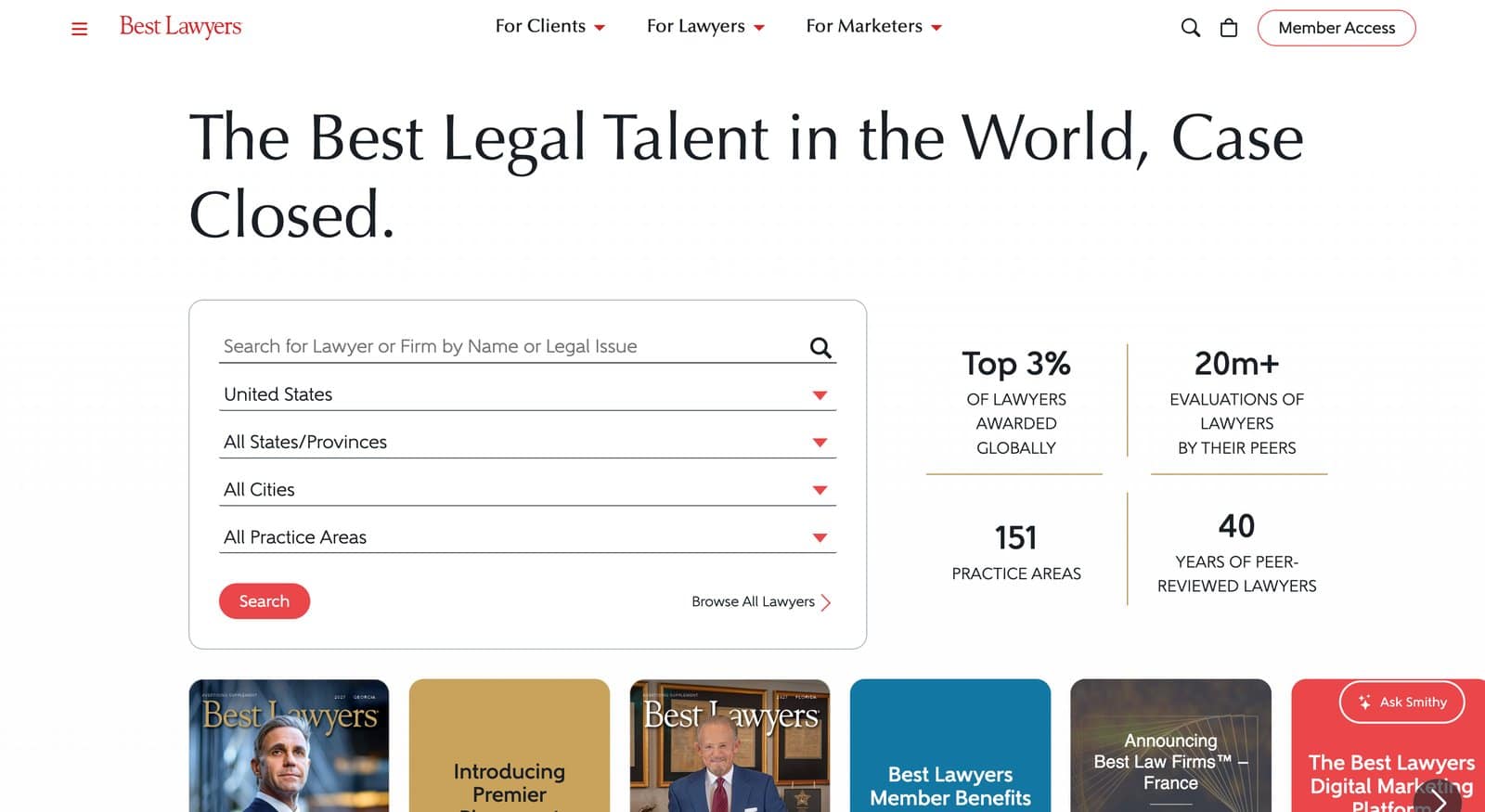
The voting process relies on confidential peer feedback. Currently listed Best Lawyers receive customized ballots based on their practice area and geographic region. They rate nominees on a 1 to 5 scale based on a specific question: if they were unable to take a case themselves, how likely would they be to refer it to the nominee?
According to its published methodology, Best Lawyers bases selection on tabulated peer survey results and verifies each candidate’s good standing with the local bar association before publication, rather than conducting an independent audit of verdicts or case outcomes. For earlier-career attorneys, Best Lawyers offers the Ones to Watch designation.
Is Super Lawyers Legitimate or Pay-to-Play?
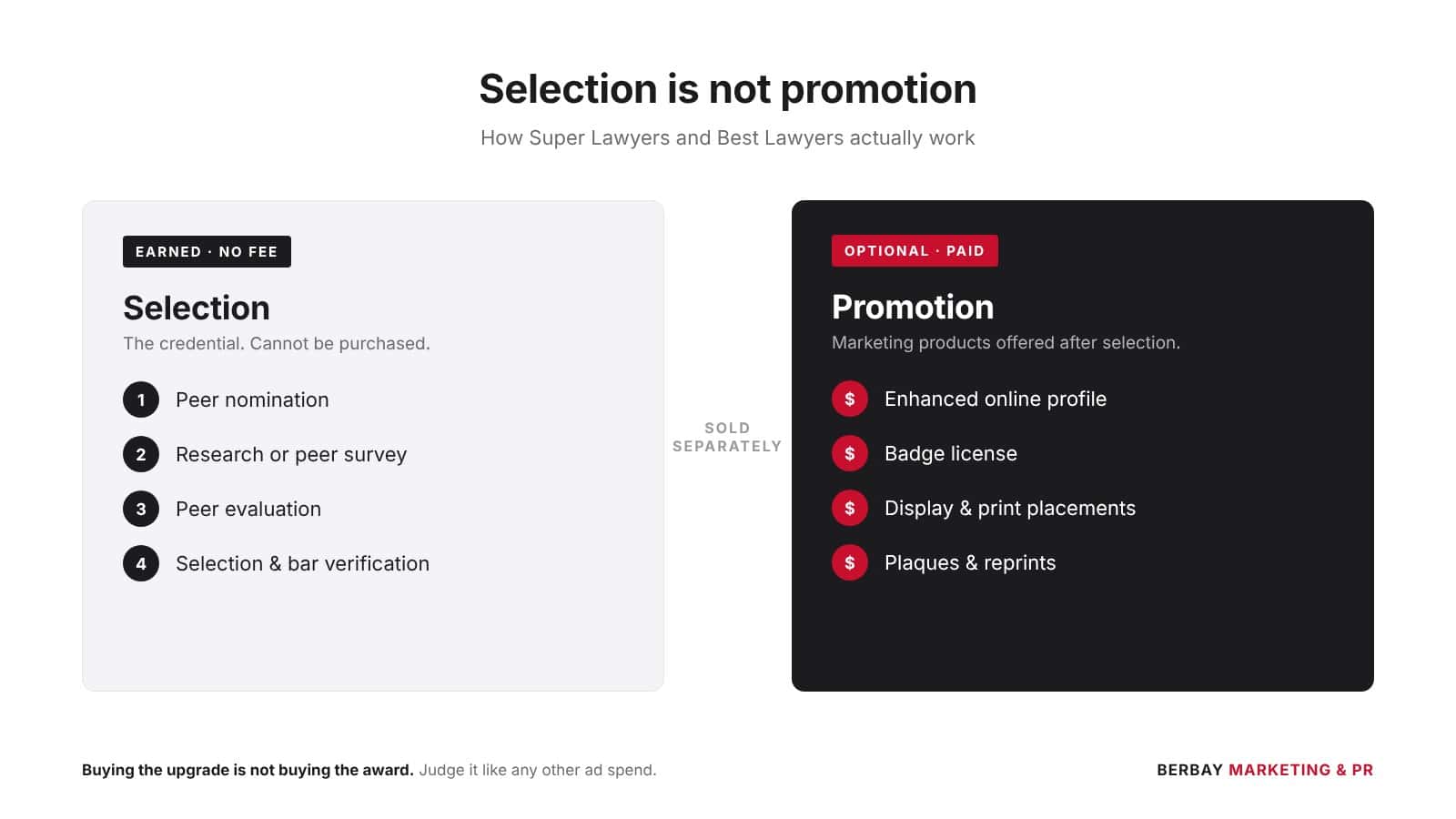
If you are wondering whether these directories are just vanity schemes, the answer is clear. Is Super Lawyers legitimate? Yes. Is Best Lawyers legitimate? Yes. The critical line that every law firm must draw is that selection is not promotion.
Neither publisher charges a fee to be nominated, evaluated or listed in the basic directory. Earning the credential requires peer validation and cannot be bought. Both organizations operate separate advertising sales divisions that pitch marketing products to lawyers after they are recognized. Buying an enhanced profile, licensing a digital badge or taking out a print ad is simply an advertising purchase, not a fee to win the award.
A law firm claiming the award proves they are objectively the best lawyers in their city is incorrect. As we frequently explain when advising firms on whether paying for a law firm award is worth it, recognition can be earned without paying; extra exposure is sold separately.
What Super Lawyers and Best Lawyers Actually Cost
Determining what Super Lawyers and Best Lawyers actually charge requires navigating customized sales pitches. Neither publisher lists public, static pricing for their premium products because rates fluctuate based on market size, practice area and bundled packages.
Instead of focusing on shifting dollar figures, firms should evaluate the cost structure based on the tiers below.
|
Cost Factor |
Pricing Structure |
|---|---|
|
Fee to be considered |
$0 (Free for both directories) |
|
Baseline listing |
$0 (Basic name/firm listing included for free) |
|
Optional paid products |
Digital badges, enhanced profiles with website links, sponsored search placements, print magazine inserts, commemorative plaques |
|
How pricing is quoted |
Quoted annually by sales representatives; varies by market, practice area, and bundle |
Before you buy an upgraded profile, treat it like any other advertising opportunity. Always check the contract terms for auto-renewal clauses. Pinpoint exactly which geographic region and practice area your sponsored ad will appear in. Ask how the publisher will report on actual profile views and clicks. Finally, understand exactly what disappears if you decide not to renew next year. Usually, the customized firm bio and clickable website links vanish the moment the subscription lapses and your license to publish the award badge ends.
Which Recognition Should Your Firm Prioritize?
There is no universal winner between the two directories. The credential your firm should prioritize depends entirely on your prospective clients and your practice area.
|
Firm Profile |
Initial Priority |
Why It Makes Sense |
|---|---|---|
|
Local consumer-facing firm (Personal Injury, Family Law, Criminal Defense) |
Super Lawyers |
Stronger name recognition among general consumers; serves as an immediate trust signal on your website. |
|
Established B2B firm (Commercial Litigation, M&A, Corporate) |
Best Lawyers |
Valued for cross-jurisdictional peer referrals; serves as a gateway to the Best Law Firms tier rankings. |
|
Lawyers recognized by both |
Lead by audience; list both on bios |
Lead with whichever matches the audience (Super Lawyers for consumer-facing, Best Lawyers for peer and B2B) and list both recognitions on attorney bios. |
|
Early-career lawyer |
Rising Stars / Ones to Watch |
Builds early third-party credibility on attorney bios before major case results accumulate. |
|
Firm with thin bios or poor intake |
Neither (Fix the foundation first) |
No directory badge will save a firm that has unconvincing attorney bios, weak client reviews, or unresponsive intake staff. |
From an agency perspective, either award works best as one layer in a broader reputation system. Because prospective clients routinely research law firms online before making contact, earning the recognition provides a useful third-party trust signal, even though no directory guarantees a steady stream of signed clients on its own. For corporate practices, getting ranked in Chambers and Partners often carries more weight with in-house counsel, making peer directories a supplementary credential rather than the main event.
How to Advertise the Award Without an Ethics Problem
Promoting your selection requires careful compliance with state bar advertising regulations as well as the guidelines provided by each of the directories. ABA Model Rule 7.1 bars misleading communications regarding a lawyer’s services, and the specific state where your firm advertises always controls the final interpretation. New York and Florida, for instance, maintain highly specific guidance on citing bona fide ratings.
To stay compliant, always use the exact award name and the specific year you were selected. Name the individual lawyer who received the recognition; do not stretch an individual award to imply the entire firm was honored. Never turn the credential into a superiority claim by calling yourself an “expert” or “the best lawyer” simply because you appear in a directory. Link directly to the publisher’s methodology page from your bio, and keep a record of your selection notification on file. For more guidance on compliance, read our overview of advertising rules for lawyers.
Frequently Asked Questions
Putting Rankings to Work in Your Firm’s Marketing
Earning recognition in legal directories is only the first step. An award does not market itself, and a passive digital badge rarely drives leads or revenue alone. The highest return on investment comes from taking that free recognition and actively amplifying it through comprehensive bio optimization, and including in marketing materials such as your newsletter or proposals.
Berbay Marketing & PR has over 30 years of experience managing nominations and rankings submissions, handling the complex application processes, and executing the public relations campaigns that turn a quiet recognition into visible market leadership. Contact Berbay Marketing & PR at 310-405-7343 or info@berbay.com to discuss how we can support your firm.